
Chapter 7 Denied Or Dismissed? What Comes Next?
Key Takeaways:
A Chapter 7 bankruptcy denial, dismissal, and discharge each have very different legal consequences. If your case was denied or dismissed, you may still have options such as converting to Chapter 13, correcting problems and refiling, or responding to renewed collection efforts. The right solution depends on why the court acted, how far your case progressed, and what deadlines now apply.
Receiving notice that your Chapter 7 bankruptcy was denied or dismissed can feel like the finish line suddenly disappeared. Many people immediately worry about wage garnishments, lawsuits, foreclosure, repossession, and whether all the time and effort they invested was wasted.
The good news is that a denied or dismissed Chapter 7 case does not always mean your bankruptcy options are over. In many situations, there is still a path forward. The key is understanding exactly what happened and acting before creditors regain momentum.
If you’re in Austin or elsewhere in Texas, taking the right steps early can make a significant difference in protecting your finances.
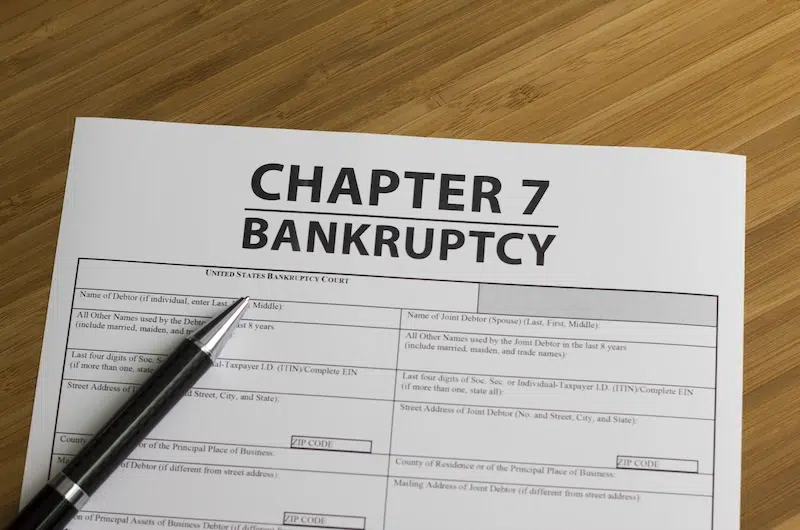
Chapter 7 Denial, Dismissal & Discharge Explained
These three terms sound similar, but they lead to very different outcomes.
What Is A Chapter 7 Bankruptcy Discharge?
A discharge is the outcome most people hope to receive.
When the bankruptcy court grants a discharge, most eligible unsecured debts, such as credit cards, medical bills, and many personal loans, are permanently eliminated under federal bankruptcy law (11 U.S.C. § 727). In a typical no asset Chapter 7 case, this often occurs about four to six months after filing.
What Does It Mean When Chapter 7 Is Dismissed?
A dismissal means the bankruptcy case ends before a discharge is entered.
Dismissals happen for many reasons, including:
- Missing required paperwork
- Failing to complete required credit counseling or debtor education
- Missing court deadlines
- Failure to appear at the Section 341 Meeting of Creditors
- Failure to comply with court orders
When a case is dismissed, your debts generally remain, and creditors may resume collection activities unless another bankruptcy filing or court order provides protection.
What Is A Chapter 7 Denial?
A denial of discharge is different from a dismissal.
Instead of simply closing the case, the court determines that the debtor is not entitled to receive a discharge. This may occur because of issues such as fraud, concealment of assets, destruction of financial records, or other conduct described in 11 U.S.C. § 727.
Because the consequences can be significant, understanding the court’s order is the first priority before deciding what to do next.
Do You Lose Your Automatic Stay Protection?
Usually, yes. The automatic stay begins immediately when a bankruptcy case is filed. It temporarily stops many collection actions, including collection lawsuits, wage garnishments, repossessions, and foreclosure proceedings.
Once a Chapter 7 case is dismissed, the automatic stay generally ends. Creditors may restart collection efforts unless another bankruptcy filing creates new protection or the court orders otherwise. If your case was denied after remaining open, the timing can become more complicated, making the specific court order especially important.
If collection activity resumes quickly, responding promptly becomes critical. Waiting several weeks after receiving the court’s order can reduce your available options.
Can You Convert To Chapter 13 Instead?
In many cases, yes. A dismissal or eligibility issue does not automatically prevent someone from seeking relief under Chapter 13 bankruptcy. Instead of eliminating qualifying debts within a few months, Chapter 13 allows eligible individuals with regular income to repay all or part of their debts through a court approved repayment plan lasting three to five years.
Conversion may be appropriate when:
- You earn too much to qualify for Chapter 7.
- You need additional time to catch up on mortgage payments.
- You want to stop foreclosure while repaying arrears.
- You need to protect property that may not be fully exempt.
- You have secured debts that require a repayment strategy.
Someone who originally hoped to file Chapter 7 may ultimately find that Chapter 13 provides a more workable solution depending on income, assets, and the reason the Chapter 7 case did not move forward. A repayment plan can help many people keep important property while addressing overdue debt over time.
Can You File Chapter 7 Again After A Dismissal?
It depends on why the case was dismissed.
Some dismissals are without prejudice, meaning you may be able to file another bankruptcy case after correcting the issue that caused the dismissal. For example, if your case was dismissed because required documents were missing or a filing requirement was not completed, resolving those problems may allow you to refile.
Other dismissals are with prejudice, which can temporarily prevent you from filing another bankruptcy case or limit the protections available in a future case. In some situations, the Bankruptcy Code also imposes waiting periods after certain dismissals, particularly when previous cases were dismissed for failing to follow court orders or appear before the court (11 U.S.C. § 109(g)).
The court’s dismissal order usually explains whether additional restrictions apply. Reviewing that order carefully is one of the first steps after learning your case has ended.
What Documents Should You Gather Immediately?
Once your Chapter 7 case is denied or dismissed, don’t wait until creditors begin contacting you again before organizing your paperwork.
Having complete records makes it much easier to evaluate whether conversion, refiling, or another strategy is available.
Start Collecting The Following Documents
Gather copies of:
- The bankruptcy dismissal or denial order
- Your bankruptcy petition and schedules
- Any trustee correspondence
- Notices received from the bankruptcy court
- Recent pay stubs
- Federal tax returns from the past two years
- Current bank statements
- Collection letters received after the case ended
- Mortgage statements or vehicle loan statements, if applicable
- Any lawsuits, garnishment notices, or foreclosure notices
Much of this information was required for your original filing and will often be needed again if another bankruptcy option is pursued.
What Should You Do First After A Chapter 7 Denial Or Dismissal?
Many people assume they should immediately file another bankruptcy. In reality, the better approach is to understand why the court acted before making another filing.
A strong plan often looks like this:
1. Read The Court’s Order Carefully
The exact wording can change your next step.
A dismissal for missing paperwork is very different from a denial of discharge based on alleged misconduct. The available solutions depend on the court’s specific findings.
2. Identify Which Collection Risks Are Immediate
Some creditors move quickly after the automatic stay ends.
If foreclosure, repossession, wage garnishment, or a pending lawsuit is involved, those deadlines may influence which bankruptcy option provides the fastest protection.
3. Determine Whether Chapter 13 Is A Better Fit
Some people discover that their financial situation has changed since the original filing.
Regular income, mortgage arrears, vehicle loans, or eligibility issues may make Chapter 13 Bankruptcy the more workable solution because it allows repayment over three to five years while helping many filers keep important assets.
A helpful overview of Chapter 13 bankruptcy basics also explains how the repayment process works through the federal bankruptcy courts.
4. Correct Problems Before Refiling
If your case was dismissed because documents were incomplete or deadlines were missed, fixing those issues first may prevent the same outcome from happening again.
If your original filing involved eligibility questions, additional financial documentation may be necessary before deciding whether to pursue another Chapter 7 bankruptcy case.
If your previous case was dismissed, the available remedy depends on the reason for the court’s action and where the case stood when the order was entered. Reviewing those details before taking another step can save time and help avoid additional filing restrictions.
Moving Forward After A Chapter 7 Setback
A denied or dismissed Chapter 7 case is serious, but it is not always the end of your bankruptcy options.
Some people qualify to convert their case into Chapter 13. Others may be able to refile after correcting procedural issues. In other situations, different legal strategies may better address creditor collection efforts.
The most important step is understanding why the court acted before deciding what comes next. Once you know the reason, you can begin identifying the quickest path toward protecting your income, your property, and your financial future.
Talk Through Your Next Step After A Chapter 7 Setback
If your Chapter 7 bankruptcy was denied or dismissed, you do not have to figure out the next move alone. At Austin Bankruptcy Lawyers, we’ll review your dismissal or denial order, explain what it means for your situation, and help identify the fastest workable path forward. Whether that involves converting to Chapter 13, correcting issues before refiling, or exploring another solution, we’ll walk through your options one step at a time. Schedule a free case evaluation today and let’s determine the best path for moving forward.
About the Author: Kannon Moore


I felt assured by their professionalism & in-depth knowledge
I had an exceptional experience working with Kannon Moore Law Firm. From the moment I consulted with them, I felt assured by their professionalism and in-depth knowledge. The team was responsive, transparent, and diligent in addressing my legal concerns. They went above and beyond to explain complex legal matters in a way that was easy to understand, and they always kept me informed throughout the process. Kannon Moore’s attention to detail and commitment to achieving the best outcome truly stood out. I highly recommend their services to anyone seeking trustworthy and dedicated legal representation.

Sean Shelter
Google Reviewed
What I appreciated the most was their genuine concern in our case.
Kannon and Sade walked us through the entire process from beginning to end. It was comforting to know that if we had any questions, Kannon or one of his staff were immediately available and ready to answer. The entire team is extremely well versed in bankruptcy law and covered all areas of concern with ease. What I appreciated the most was their genuine concern in our case. We felt that the attention given went above and beyond, and I would highly recommend Kannon Moore Law for your bankruptcy needs.
Jen Mertz
Google Reviewed
Kannon Moore Law Firm is the team to trust
I recently had the privilege of working with Kannon Moore Law Firm on my bankruptcy case, and I can not speak highly enough of the exceptional service I received. From the first consultation, Kannon made me feel understood and supported during a challenging time. He guided me through every step of the process with professionalism, expertise, and genuine care. Kannon’s attention to detail and commitment to my case gave me confidence and peace of mind. If you're considering bankruptcy, Kannon Moore Law Firm is the team to trust. He is not just an outstanding attorney but also a compassionate advocate for his clients.
Mariama Kamara
Google Reviewed
Look no further you have found your team!
I highly recommend Kannon Moore and his team for any of your bankruptcy needs. He is a master when it comes to this and is full of knowledge. His confidence and willingness to help will put you at ease. He made the process super easy to understand and was even able to point me to the right people to get a vehicle financed while in an active bankruptcy. Look no further you have found your team! Thank you, Kannon, Celly and Sade! We appreciate you very much and will be recommending you all in the future.
David Herrera
Google Reviewed
The outcome was better than was expected
My experience with Kannon Moore and his staff has been wonderful. And the outcome was better than was expected. Kannon is very kind and always treated me with respect and kindness. I have a lot of issues and he has made everything easy to understand. Kannon is very knowledgeable and besides getting some information for him, he has done everything else. I do recommend using Kannon Moore Law if you need to.
Donovan Reude
Google Reviewed
We are now debt free!
So… this guy right here… is the man! For real! He made this whole bankruptcy thing soooo easy! And much more cheaper than other people out there. No he did not pay me and my wife to say this, this guy’s the real deal! Our situation was so horrible, taxes, medical bills, credit card debt, this man made it happen! We are now debt free! Hire this man! You won’t regret it!
Carlos Romero
Google Reviewed
He surpasses the 5-star rating and should be given a 10.
Mr. Moore and his staff were very attentive to our case and was always available to answer our questions. If I had to leave a message, he called me back as soon as possible. He has genuine care and concern for his clients, and we would recommend him for your legal needs. He surpasses the 5-star rating and should be given a 10.
Phyllis Johnson
Google Reviewed